

Common Causes of Construction Delays and How to Prevent Them
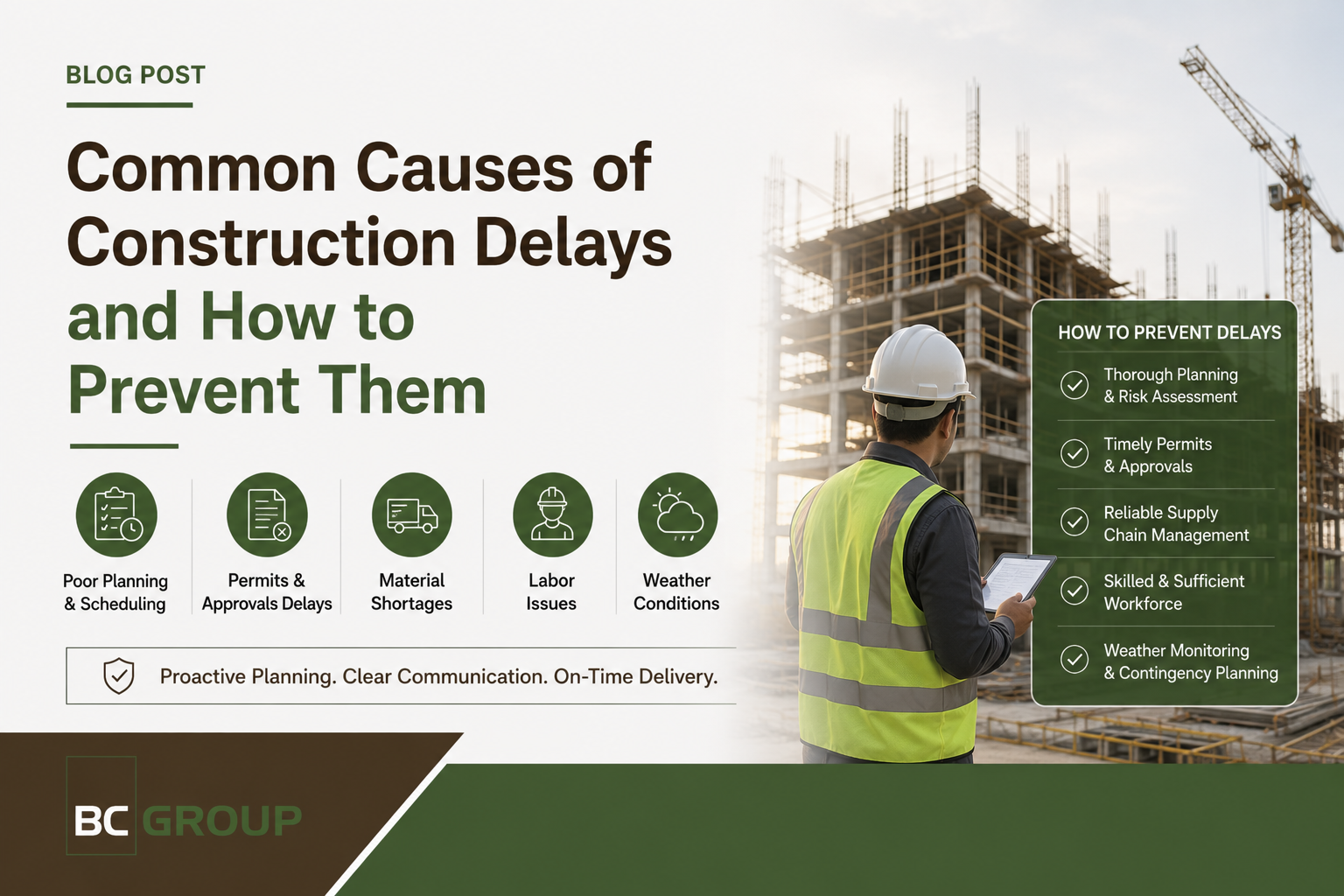
Construction delays can impact every aspect of a project. Missed deadlines often lead to increased costs, strained stakeholder relationships, scheduling conflicts, and disruptions to future operations. Whether developing affordable housing, senior living communities, healthcare facilities, commercial buildings, or public projects, maintaining schedule predictability is one of the most important factors in achieving a successful outcome.
Some delays are inevitable, but many can be predicted and controlled with proper planning, experience with similar projects as well as clear communication between all participants. Knowing causes of delays is how you achieve the first steps toward preventing them.
Why Schedule Control Matters
A construction plan takes more than a timeline. It’s a means of laying out the project plan, it is the main structure and serves as a vehicle for the coordination of work of owners, architects, engineers, contractors, consultants, lenders, and regulatory authorities. Owners benefit from the following when schedules are predictable and organized:
- Greater budget certainty
- Improved resource planning
- Financing and carrying costs are less
- More coordinated project teams
- Reliable occupancy and moving-in dates
- Minimized operational disruption
- Greater confidence by stakeholders.
And of course, delays lead to a cascading effect that can affect financing and permitting, staffing and revenue sources.
Supply Chain Disruptions
Supply chain uncertainty has been one of the biggest challenges for the construction sector in recent years. Many building materials and equipment components have experienced lengthy lead times such as: electrical equipment, HVAC systems, generators, elevators, specialty finishes, windows, and building controls. Having just one component delayed can affect the overall construction processes downstream.
Supply chain-related product delay can be avoided through early planning and procurement. Project teams should know long-lead items during preconstruction, but also work with contractors and suppliers to identify and manage long-lead products and their availability. Proactive procurement typically delivers owners higher schedule certainty with lower risk of costly disruptions.
Labor Shortages
Many trades in the construction industry are experiencing periodic labor shortages. Locating and finding qualified electricians, plumbers, HVAC technicians, concrete crews, and specialty subcontractors can be difficult at times. These shortages can result in decreased productivity, scheduling conflicts and longer construction intervals.
Early contractor participation and a realistic schedule are good ways to prevent delays linked to labor. In addition, active contractors who take part in preconstruction can share valuable information regarding the availability of their workforce. Good working relationships with established contractors and subcontractors keep your project on schedule.
Approvals and Permitting and Licensing Authorities
Projects need to be approved by several different agencies: planning, building, utilities, fire department, environmental agency, among others. Timelines can vary with project complexity and jurisdictional constraints. Delays can happen for a variety of reasons in submitting permits, where incomplete submission of approvals can be a factor, no documentation exists, or even when reworking is necessary during the review process.
Strategies to obtain partial permits early on in the permitting process may aid in starting construction sooner in the schedule, but often come with added risk considerations. in Project teams should also schedule reasonable review timeframes within the overall project timeline.
Changes on the Design and Scope Creep
Construction scope creep can have a major effect on the schedule. Although some adjustments may be inevitable, repeated design changes and changing project requirements with no clear project goals frequently introduce changes that can be a source of significant disruptions. Design revisions often involve additional reviews, pricing adjustments, material purchasing changes, and coordination between diverse stakeholder groups, etc.
The only way to ameliorate this is by investing in the planning and design process. Well-defined project goals, early stakeholder buy-in, and appropriate design reviews can help minimize expensive changes later on in the project. A rigorous change management process allows teams to assess the schedule and budget impact of proposed changes before any decision is made.
Communication and Coordination are Weak
Many people are involved in construction projects and they are all trying to achieve a single goal. When details aren’t communicated effectively, miscommunication can happen as to who does what, the due dates, what design goal or what the project priority is. Small miscommunications can turn into bigger project challenges in no time.
Routine project meetings, reporting structures that are transparent and decisions that are documented and where everyone knows what to expect, and communication channels that are transparent are in place to keep teams aligned and kept informed. Owner’s Representatives are frequently key players in enabling and facilitating the exchange of information among various stakeholders by ensuring that problems are spotted and rectified before they hamper project delivery.
Unforeseen Site Conditions
Unexpected site conditions can also lead to substantial delays after construction starts. Examples include unsuitable soils, underground utilities, environmental issues, infrastructure conflicts, existing infrastructure or conflicts with current infrastructure or previously overlooked site requirements; and, in some cases, unknown constraints at construction sites. The findings in these locations can necessitate redesign interventions, additional permitting or modifications of the construction methods.
In-depth site visits during project planning and prior research or thorough site checks and due diligence conducted as part of the project planning process can have significant impact when project site investigation and research of the project can find an array of risks before the construction phase of the project should be initiated. While not every problem can be anticipated, thorough analysis will greatly reduce the chance of costly surprises.
Weather and Environmental Factors
Weather can’t be regulated, but it can be planned for. Heavy rain, snow, hot or cold weather, and wind can interrupt work in construction sites or on the exterior. While delays related to weather can always happen, project schedules should take seasonal and historic weather patterns into account. When the weather gets tough, contingency planning is a great way for teams to get ready for disruptions and recover more quickly.
Importance of Proactive Project Management
Successful projects rarely come by chance. Predictability of schedules occurs through planning and risk management, ongoing monitoring and remaining proactive in decision making. Effective project leadership allows issues to be identified, stakeholders to be coordinated, and accountability to be held across the length of the project.
At BC Group we realize that all projects require a substantial investment in time, resources and organizational time and effort. We assist owners in understanding complexity, mitigating risks and keeping a project on schedule and on track via owner representation, development management and project oversight services.
While construction delays can never be completely eliminated, many can be anticipated and mitigated through strategic planning and experienced project leadership. By addressing risks before they become problems, owners can improve schedule reliability, protect budgets, and achieve successful project outcomes.