

Sustainable Design in Commercial Development – How and Why?
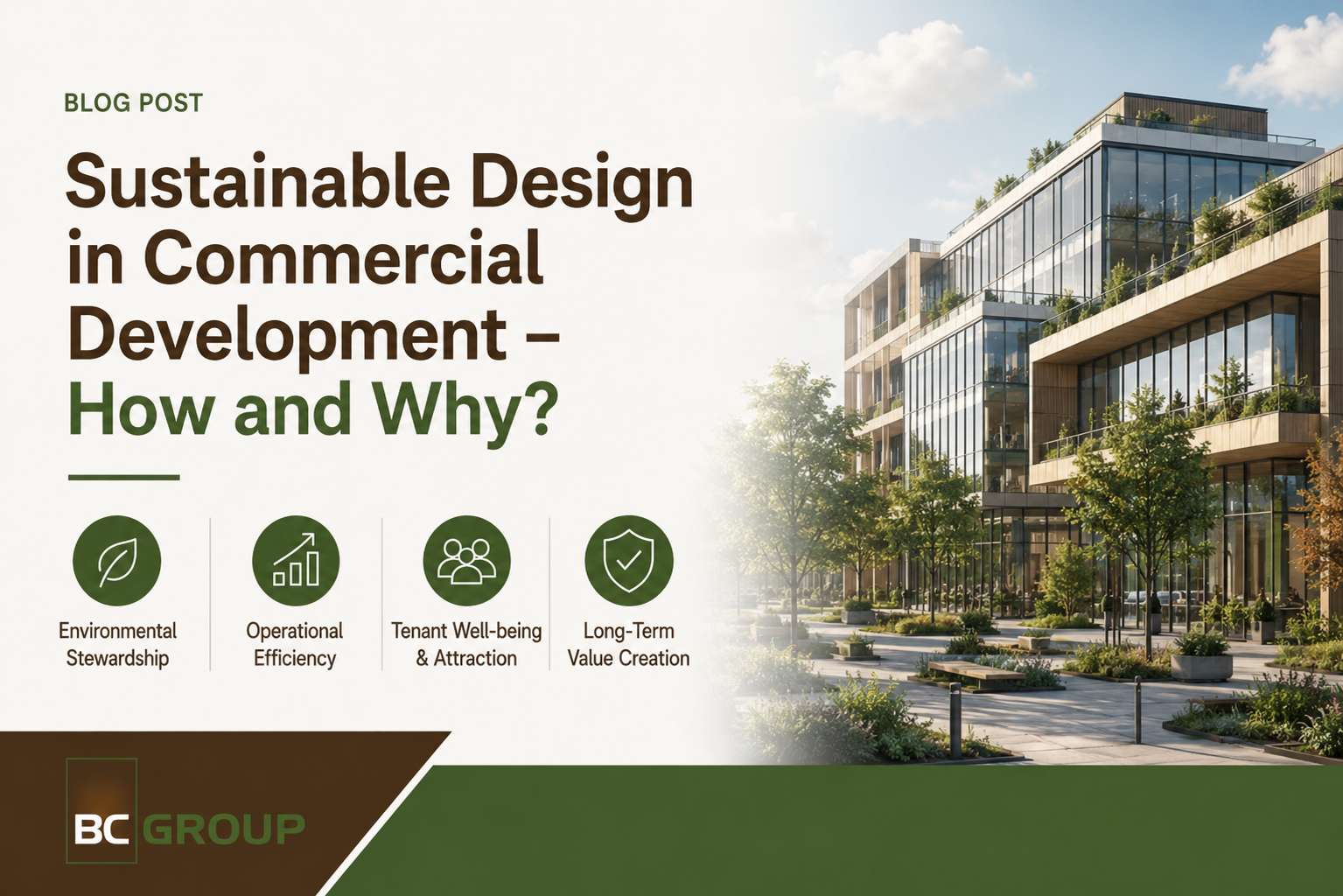
Sustainable design has moved from a niche concept to a core expectation in commercial development. Clients, tenants, and investors are all paying closer attention to how buildings perform over time, not just how they look on day one. For firms like BC Group, this shift isn’t a trend to chase. It’s a smarter way to build.
At its core, sustainable design focuses on creating buildings that use fewer resources, operate efficiently, and hold their value longer. It’s not about adding a few green features at the end of a project. It starts early, with thoughtful planning and a clear understanding of long-term impact.
Why Sustainability Matters in Commercial Projects
Commercial buildings consume a significant amount of energy and resources. That reality brings both responsibility and opportunity.
When developers prioritize energy efficiency and sustainable construction practices, they’re not just reducing environmental impact. They’re creating spaces that perform better financially. Lower utility costs, reduced maintenance, and stronger tenant appeal all add up.
There’s also growing demand from businesses that want to align their operations with sustainability goals. A well-designed building can support that, making it more attractive in a competitive market.
Energy Efficiency as the Foundation
Energy efficiency is often the starting point for sustainable design in commercial development. It’s one of the most direct ways to reduce operating costs and improve building performance.
This goes beyond installing efficient lighting or upgrading HVAC systems. It starts with how the building is designed.
Orientation, insulation, window placement, and materials all play a role. A building that maximizes natural light while minimizing heat gain can significantly reduce energy use. Smart systems that monitor and adjust energy consumption in real time take it even further.
These decisions made early in the design process have a lasting impact. Once a building is complete, it’s much harder and more expensive to make major efficiency improvements.
Understanding LEED and Its Value
Many commercial projects look to Leadership in Energy and Environmental Design as a framework for sustainable construction.
There are other popular green building certification programs as well including WELL, Passive House, Energy Star, Green Globes, Earth Advantage and others, each with their own focus and benefits.
LEED certification provides a structured approach to designing and building high-performance spaces. It evaluates areas like energy use, water efficiency, materials, and indoor environmental quality.
For developers, pursuing LEED certification can offer several advantages:
- A clear set of standards to guide design decisions
- Increased credibility with tenants and investors
- Potential tax incentives or regulatory benefits in some regions
But it’s important to remember that LEED is a tool, not the goal. The real value comes from the performance of the building itself. Certification simply validates that performance.
Looking Beyond Upfront Costs
One of the biggest misconceptions about sustainable design is that it’s too expensive. While there can be higher upfront costs, focusing only on initial investment misses the bigger picture.
Lifecycle cost analysis tells a different story.
When you factor in energy savings, reduced maintenance, and longer system lifespans, sustainable buildings often cost less to operate over time. That’s where the real return shows up.
For example, investing in high-quality insulation and efficient systems may increase construction costs slightly. But those choices can lead to years of lower utility bills and fewer repairs.
Developers who take a long-term view tend to see sustainable design as a smart financial decision, not just an environmental one.
Lower Operating Costs and Higher Asset Value
The connection between sustainability and financial performance is becoming harder to ignore.
Buildings designed with energy efficiency and long-term performance in mind typically have lower operating costs. That’s a direct benefit for both owners and tenants.
Lower costs make a property more attractive in the leasing market. Businesses are increasingly aware of how occupancy expenses affect their bottom line. A building that helps reduce those costs stands out.
There’s also a clear impact on asset value.
Sustainable commercial properties often command higher rents and maintain stronger occupancy rates. Investors recognize the reduced risk associated with efficient, future-ready buildings. Over time, that translates into higher valuations.
In a competitive market, sustainability can be a differentiator that drives both short-term returns and long-term growth.
Materials and Resource Efficiency
Sustainable design also considers the materials used in construction.
Choosing durable, low-impact materials can reduce both environmental footprint and maintenance needs. Recycled or locally sourced materials often require less energy to produce and transport. That’s a win from both a sustainability and cost perspective.
It’s also about reducing waste during construction. Careful planning and efficient use of materials can significantly cut down on excess.
These choices might not always be visible once the building is complete, but they play a major role in overall performance. It’s part of our responsibility when we act as Owner Representatives – to recommend options when possible that contribute to the goal of sustainable design.
Designing for Long-Term Flexibility
Commercial spaces rarely stay the same forever. Tenants change, industries evolve, and needs shift.
Sustainable design takes that into account.
Flexible layouts and adaptable systems make it easier to modify a space without major renovations. That reduces future construction costs and minimizes disruption.
For developers, this kind of flexibility adds another layer of value. A building that can evolve over time is more resilient in a changing market.
Creating Healthier Indoor Environments
Sustainability isn’t just about energy and costs. It also impacts the people who use the space.
Good indoor air quality, natural lighting, and comfortable temperature control all contribute to a better environment for occupants. These factors can improve productivity, reduce absenteeism, and enhance overall satisfaction.
For businesses, that matters. Employees or tenants spend a large portion of their day indoors. A space that supports their well-being becomes a real asset.
Making Sustainable Design Practical
For many developers, the challenge isn’t understanding the benefits. It’s knowing how to implement sustainable strategies without overcomplicating the project.
The key is integration.
Sustainable design works best when it’s part of the process from the beginning. Trying to add it in later often leads to higher costs and missed opportunities.
Working with experienced teams who understand both design and construction helps streamline decisions. It ensures that sustainability goals align with budget, timeline, and overall project vision.
A Smarter Way to Build
Sustainable design in commercial development is about more than meeting expectations. It’s about building smarter from the start.
Energy efficiency, thoughtful material choices, and a focus on lifecycle costs all contribute to stronger, more valuable properties. The benefits show up in lower operating costs, higher asset value, and better performance over time.
For BC Group, this approach reflects a commitment to long-term thinking. It’s not just about delivering a finished building. It’s about creating spaces that continue to perform, adapt, and deliver value well into the future.
That’s what sustainable design should do.
Frequently Asked Questions
What is sustainable design in commercial development?
Sustainable design in commercial development focuses on creating buildings that use resources efficiently, reduce environmental impact, and deliver long-term value through energy efficiency, durable materials, and thoughtful planning.
How does sustainable design reduce operating costs?
Sustainable buildings often use less energy and water, require less maintenance, and incorporate longer-lasting systems and materials. These factors help lower utility expenses and ongoing operational costs over the life of the building.
What are the benefits of LEED certification for commercial projects?
LEED certification provides a recognized framework for sustainable building practices. It can improve marketability, attract tenants and investors, support regulatory compliance, and demonstrate a commitment to environmental responsibility.
Is sustainable commercial construction more expensive?
While sustainable construction may involve higher upfront costs in some cases, the long-term savings from reduced energy consumption, lower maintenance requirements, and improved building performance often outweigh the initial investment.
How do energy-efficient buildings increase property value?
Energy-efficient buildings typically have lower operating costs, stronger tenant demand, and higher occupancy rates. These advantages can lead to increased rental income and improved long-term asset value.
What role do building materials play in sustainable design?
Material selection is a key component of sustainable design. Durable, recycled, locally sourced, and low-impact materials can reduce environmental impact, minimize waste, and lower maintenance costs over the building’s lifespan.
Why should sustainability be considered early in the design process?
Integrating sustainability from the beginning allows developers to optimize building orientation, energy performance, material selection, and system design. Early planning is often more cost-effective and delivers better long-term results than making changes later in the project.