
How an Owner’s Representative Improves Project Communication
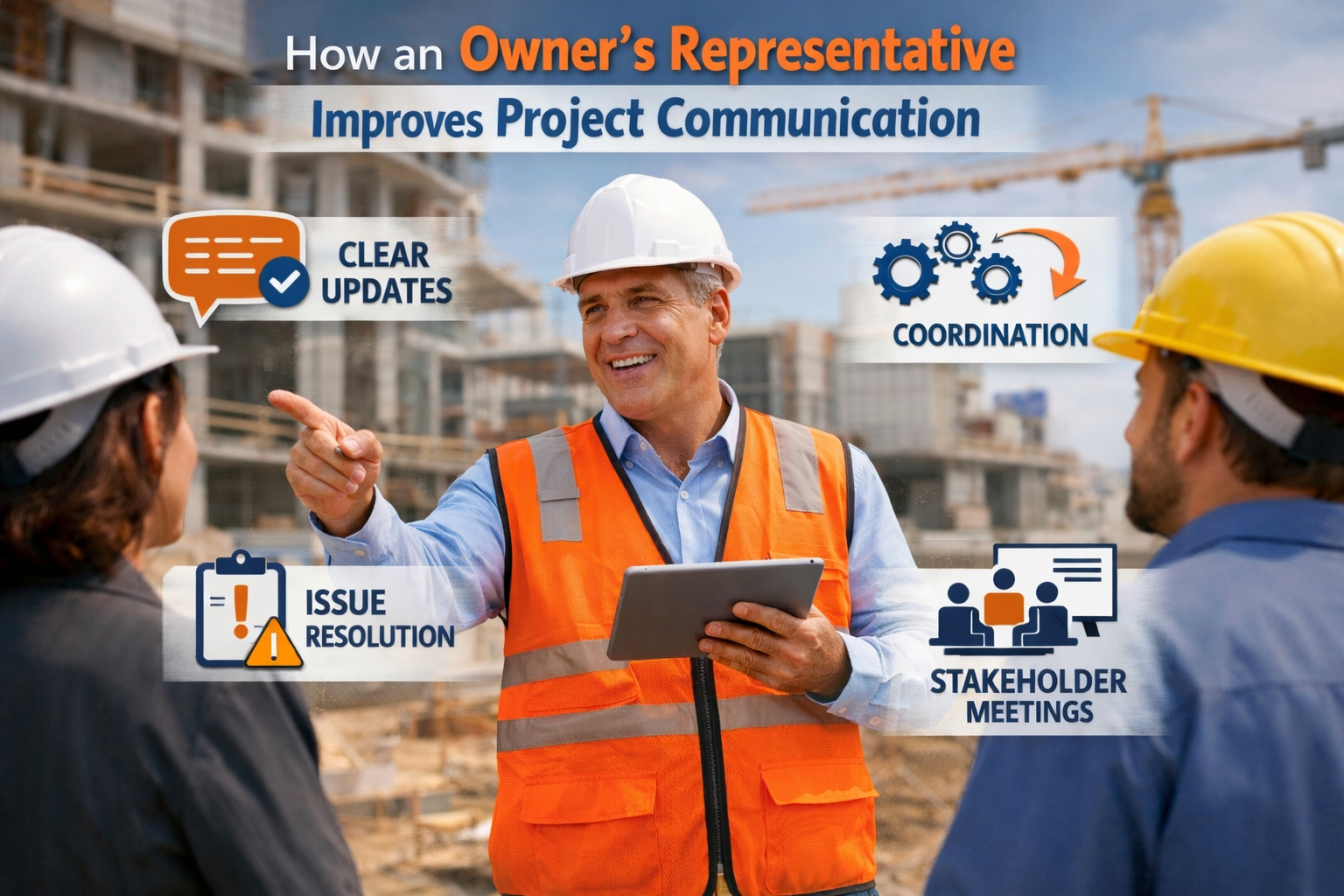
Communication is one of the most important factors in the success of any capital project. Whether the project is a new corporate building, a healthcare facility, or a community center, multiple stakeholders are involved. Architects, engineers, contractors, regulators, owners, and community representatives all have their own priorities and responsibilities. Without clear communication, misunderstandings and delays become almost inevitable. That’s why an Owner’s Representative is a strong asset for any project team.
An Owner’s Representative is a professional or firm that works for the project owner to represent their interests and make sure the owner’s goals are being met throughout the project. They bring deep experience in construction, planning, and coordination that helps streamline communication among everyone involved.
This article covers how an Owner’s Representative improves project communication, along with practical tips you can use to strengthen coordination among stakeholders on your own project. For broader context on this role, see why organizations need an Owner’s Representative today.
What an Owner’s Representative Does for Communication
An Owner’s Representative is part advisor, part facilitator. Their focus is on representing the owner across every phase of a project, from initial planning through final closeout. They serve as the main point of contact between the owner and everyone else involved in the project.
Because an Owner’s Representative works only for the owner, not for contractors or designers, firms like BC Group play a key role in aligning diverse project teams around shared goals. When everyone hears the same messages and works from the same expectations, projects run more smoothly.
Here are five specific ways an Owner’s Representative improves communication on a project:
- Serving as a central point of contact for all parties. One of the biggest communication challenges on complex projects is that there are many voices, teams, and priorities involved at once. An Owner’s Representative acts as a central hub where information comes in and goes back out in clear, organized ways. Instead of owners getting separate updates from contractors, designers, and regulators that may conflict or confuse, they get coordinated information through a single source, meaning fewer misunderstandings and more consistent messages across the board.
- Clarifying expectations between groups. People in different project roles often speak different languages. Architects, engineers, contractors, and owners each have their own terminology and assumptions. An Owner’s Representative helps translate ideas so everyone understands what’s expected, making sure project goals, schedules, and budgets are communicated in ways each party can actually act on.
- Supporting consistent reporting and documentation. Good communication depends on good documentation. Too often, decisions and agreements get lost because records are incomplete or scattered across multiple teams. An Owner’s Representative makes sure key decisions, changes, issues, and approvals are documented and organized, which adds transparency and accountability to the whole process.
- Helping resolve conflicts quickly. Conflicts happen on complex projects. Differences of opinion about scope, schedule, quality expectations, or cost are common. When disputes arise, an Owner’s Representative acts as a neutral coordinator, taking input from all sides and framing options that bring teams back into alignment before small disagreements turn into bigger delays. This is closely tied to managing budget and schedule risks with professional Owner’s Rep services.
- Helping owners make informed decisions faster. Owners are often pulled in many directions, especially when they’re also running an ongoing business or institution. An Owner’s Representative distills complex project data into concise, actionable updates, so owners get the information they need to make confident decisions without being overwhelmed by technical detail.
For more on this role generally, see our related overview of the benefits of an Owner’s Representative on your construction project.
Practical Tips for Better Stakeholder Coordination
Even with an Owner’s Representative in place, strong communication doesn’t happen automatically. It takes structure and ongoing effort from everyone on the project team. Here are seven practical steps that support better coordination, whether or not an Owner’s Rep is already part of your team, and that help address the kinds of delays that poor coordination often causes.
Set communication guidelines early. At the start of any project, define how communication will happen: how often updates will be shared, who needs to attend which meetings, and how information will be tracked. Establishing this upfront prevents confusion about expectations later.
Build a stakeholder map. Identify all stakeholders early and document their interests, responsibilities, and decision-making roles. Knowing who needs what information, and when, helps tailor communication to actually be useful rather than generic.
Use a shared communication platform. Digital tools that provide one source of truth for schedules, files, reports, and decisions reduce email overload and keep teams aligned. Everyone can check project status in real time, so nothing important gets missed.
Hold structured meetings with clear outcomes. Meetings should be regular but also purposeful. Share an agenda beforehand, record decisions, and circulate notes quickly so follow-up actions are assigned and nothing gets forgotten.
Encourage two-way communication. Good communication isn’t just pushing information out. It’s also listening to feedback from stakeholders. Encouraging questions, ideas, and concerns helps surface issues before they become real problems.
Keep owners and teams informed with balanced updates. Provide updates detailed enough for operational teams and clear enough for owners. Summarize technical points in owner-friendly terms, and share full technical detail directly with the teams that need it.
Review your communication plan regularly. Check in periodically on how well communication is actually working. If patterns of confusion or delay start showing up, adjust the plan to meet current needs rather than sticking with what was decided at the project’s start.
The Bottom Line
Strong communication doesn’t happen by accident on a complex capital project. It requires both the right structure, often provided by an Owner’s Representative acting as a central point of contact, and intentional habits like clear guidelines, shared tools, and regular check-ins.
Together, these two pieces reduce errors, cut down on delays, and make for a smoother project experience for everyone involved, from the owner to the contractors to the regulators reviewing the work. This kind of coordinated oversight connects closely with the role of an Owner’s Rep as construction manager in controlling project risk. If you’re planning a project and want to understand how an Owner’s Representative could support your specific communication needs, we’d welcome the conversation.
Frequently Asked Questions
How does an Owner’s Representative improve communication on a project?
An Owner’s Representative acts as a central communication hub, ensuring that information between owners, contractors, designers, and regulators is consistent, organized, and clearly coordinated.
Why is a central point of contact important in construction projects?
Having a central point of contact reduces confusion, prevents conflicting updates, and ensures that all stakeholders receive aligned and accurate information throughout the project.
How does an Owner’s Representative help with misunderstandings between teams?
They translate technical language between architects, engineers, contractors, and owners, ensuring that expectations, schedules, and budgets are clearly understood by all parties.
What role does an Owner’s Representative play in conflict resolution?
They help resolve disputes quickly by acting as a neutral coordinator, identifying solutions that align with project goals before disagreements escalate into delays or added costs.
How does better communication affect project outcomes?
Improved communication leads to fewer errors, reduced delays, better decision-making, and smoother collaboration among all stakeholders involved in the project.